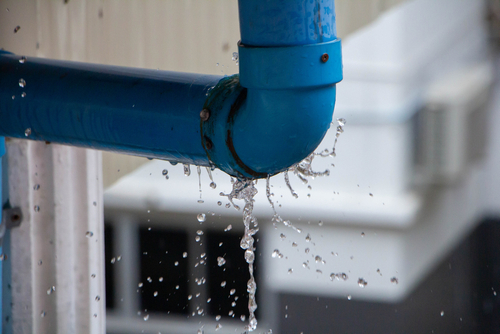
Most Rockwall, TX homeowners do not realize their water line is leaking until the damage has been building for weeks or months. The pipe runs underground from the city main to your house through Rockwall County’s heavy clay soil, completely out of sight. By the time symptoms show up inside the home or on your water bill, the leak has already been saturating the soil around your foundation and accelerating the exact kind of clay expansion that caused the problem in the first place.
Rockwall’s clay soil follows the same Blackland Prairie pattern found across the eastern DFW Metroplex. It expands significantly when wet and contracts when dry, and those volume changes can put lateral and vertical pressure on rigid buried pipe. Recurring wet spots, pressure changes, or foundation-area moisture should be checked before the issue spreads.
Your water line absorbs that pressure constantly. Over years, the joints weaken, the pipe wall fatigues, and eventually a crack or separation forms. Water escapes into the surrounding clay, the clay swells from the added moisture, and the increased pressure accelerates the damage. It is a feedback loop that only gets worse with time.
Why Rockwall Water Lines Corrode from the Inside Too
The soil attacks the pipe from the outside, but the water attacks it from the inside. Rockwall receives treated water from the North Texas Municipal Water District, sourced from Lavon Lake and surrounding reservoirs. NTMWD classifies this water as moderately hard, which means dissolved minerals — primarily calcium and magnesium — flow through your water line every day.
In copper pipes, hard water gradually corrodes the interior walls and creates pinhole leaks that are nearly impossible to detect without professional equipment. In galvanized steel pipes found in older Rockwall homes, the minerals accelerate rust formation inside the pipe, restricting flow and eventually eating through the pipe wall entirely. Even newer PVC and PEX water lines can develop joint failures when the surrounding clay shifts enough to pull fittings apart.
How to Spot a Hidden Water Line Leak
Your water bill is the earliest warning system. If your bill increases by 20 percent or more without a change in usage, water is leaving the system somewhere between the meter and your house. The City of Rockwall meters usage precisely, so comparing month-over-month totals is a reliable way to catch a developing leak early.
A wet or unusually green patch of lawn between your home and the street — especially during a dry period — means water is saturating the soil from below. Mud or erosion near your foundation that appears without rain points to the same issue.
Inside the home, watch for a gradual drop in water pressure across all fixtures. A single low-pressure faucet is usually a fixture problem, but whole-house pressure loss means the main supply line is not delivering full volume. Discolored water — brownish or rusty when you first turn on a tap — indicates that soil or corrosion particles are entering through a crack in the line.
The most expensive symptom is new foundation cracks. A leaking water line pumps water directly into the clay next to your foundation, causing it to swell unevenly. This creates differential settlement — one section of your foundation rises while another stays put or sinks — and the resulting cracks can cost thousands to repair on top of the plumbing work.
What Repair Looks Like in Rockwall Clay
Once a leak is confirmed, the repair method depends on the pipe material, the location of the damage, and how much of the line is compromised. A single crack or joint failure in an otherwise sound pipe can often be repaired with a targeted spot fix. If the line shows corrosion or damage in multiple locations, a full water line replacement is the more cost-effective long-term solution because you are not chasing the next failure six months from now.
In Rockwall’s clay soil, trenchless methods are preferred when feasible because they minimize the amount of excavation in soil that will swell and shift after being disturbed. Less digging means less disruption to your landscaping and a faster return to stable soil conditions around the new pipe.
Protecting the New Line
If you are replacing a water line or your existing line is still in good shape and you want to keep it that way, reducing the mineral load flowing through it extends its life significantly. A whole-house water filtration system treats the water before it enters your home and slows the internal corrosion that hard water causes in every type of pipe material.
Pair that with seasonal checks of your water bill and periodic visual inspections of your yard for wet spots, and you have a solid early detection system that catches the next problem before it turns into foundation damage.
If your water bill has spiked, your pressure has dropped, or you are seeing wet spots in your yard, contact Full Force Plumbing to schedule a water line inspection. We are a plumber serving Rockwall and the surrounding communities with the equipment and clay soil experience to find the leak and fix it right.