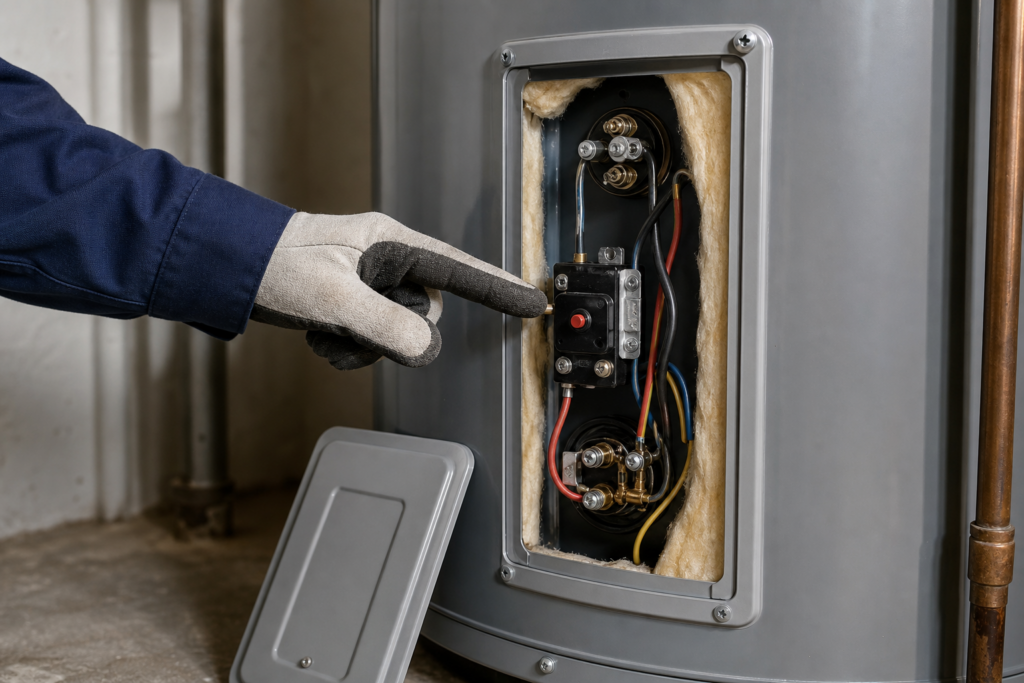
If your electric water heater’s reset button keeps tripping, the high-limit safety control is cutting power because the unit may be overheating or because a thermostat, heating element, wire, or control is not operating correctly. Do not keep pressing the button. If it has already been reset once and trips again, stop using the heater and leave its dedicated breaker off when you can safely reach a dry, undamaged electrical panel.
Do not remove the water heater’s access panels or insulation to look for the button. Conventional electric tank water heaters commonly use 240-volt power, and dangerous voltage may be present behind those covers. A repeated trip needs professional diagnosis before the heater is returned to service.
The Reset Button Is a Safety Control, Not an On-Off Switch
On many electric tank water heaters, the red reset button is part of the upper thermostat and high-limit control assembly. Its job is to interrupt power when the control senses a temperature condition outside the expected operating range.
A high-limit trip is different from a normal heating cycle. The thermostats should turn the heating elements on and off as water reaches the selected temperature. The reset button should not need routine attention. When it trips repeatedly, simply restoring power does not correct the condition that made it open.
It is also different from the circuit breaker in your electrical panel. The breaker protects the branch circuit; the high-limit switch responds to conditions at the heater. Either one may interrupt operation, but they are not interchangeable clues.
What to Do When It Trips Again
Stop using hot water from the affected heater until it is evaluated. If you know which breaker serves the water heater and the electrical panel is dry, cool, undamaged, and safely accessible, switch that breaker off and leave it off.
Do not repeatedly cycle the breaker to see whether the heater will stay on. Do not open either access compartment, move insulation, press the button again, or touch a cover that feels hot. Do not test wires or heating elements with a meter. Those steps can expose live terminals and do not provide a safe shortcut to the cause.
If there is water on the floor near the heater, do not step through it to reach the appliance, a disconnect, or the electrical panel. Keep people and pets away. If the path to the panel is wet or you notice smoke, arcing, buzzing, heat, or visible damage at the panel, do not touch it. Request urgent professional help from a safe location.
Why a High-Limit Reset May Keep Tripping
Several conditions can produce the same symptom. The trip identifies a safety response; it does not identify the failed part by itself.
A Thermostat Is Not Controlling Temperature Correctly
Electric tank heaters commonly use upper and lower controls to manage their heating elements. A thermostat that sticks, is miscalibrated, has poor contact with the tank, or no longer switches correctly may keep an element energized longer than intended. Water temperature can rise until the high-limit control opens.
Changing a temperature setting is not a safe test for a repeated trip because the controls are located behind powered access compartments. A professional needs to de-energize the heater, confirm the absence of voltage, inspect how the controls contact the tank, and test their operation.
A Heating Element Is Failing or Grounded
A damaged heating element can behave unpredictably. In some failure modes, current can pass where it should not and continue adding heat even when a thermostat should have ended the cycle. In other cases, the circuit breaker may trip, the heater may stop producing enough hot water, or the failure may be intermittent.
The outside of the tank will not show whether an element is electrically grounded. Determining that requires controlled electrical testing after the unit is safely isolated. Do not remove an element cover, drain the tank, or place meter probes on terminals yourself.
Wiring or a Connection Is Heat-Damaged
A loose connection can create resistance and concentrated heat. A terminal, connector, or wire may discolor, weaken, or damage a nearby control. The heater may give off a hot-plastic or electrical odor, make an unusual buzzing sound, or fail intermittently before the problem becomes visible from outside.
Burning odor, smoke, buzzing, or scorching should be treated as urgent. Leave the breaker off if it can be switched off safely, keep clear of the unit, and do not remove a panel to search for the source.
The High-Limit Control Itself Has Failed
The safety control can wear or fail, but replacing it without testing the thermostats, elements, connections, and actual water temperature can miss the reason it opened. A new reset control should never be used to mask an overheating or wiring condition.
Heat Is Building Beyond the Expected Range
Excessive water temperature can result from a control fault, an incorrect setting, poor thermostat contact, or another component problem. Mineral buildup may affect heating performance and cycle time, but a repeated high-limit trip should not be blamed on sediment without testing. Flushing the tank or lowering a setting is not a substitute for an electrical safety diagnosis.
Warning Signs That Need Prompt Attention
The reset-button trip is enough reason to stop repeated restarting. Certain symptoms make the situation more urgent:
- Water suddenly feels much hotter than usual or causes a scalding risk.
- Steam or very hot water appears at a fixture.
- Water is flowing from the temperature-and-pressure relief discharge pipe.
- The heater, access cover, conduit, or nearby wall feels unusually hot.
- You smell burning plastic or an electrical odor.
- You hear buzzing, crackling, or popping from an access compartment.
- You see smoke, scorch marks, melted material, or discoloration.
- Water is leaking onto or near the electrical connection.
- The water-heater breaker also trips or will not remain set.
Keep children and pets away from the heater and hot-water fixtures. If the water heater relief valve is dripping or discharging, never cap or plug its pipe. The relief system and the electrical high-limit control are separate safety devices, and either symptom requires the cause to be evaluated.
Call emergency services if there is an active fire or immediate danger. For smoke, arcing, severe overheating, or water around energized equipment, do not approach the heater or panel merely to shut it down.
Safe Observations That Help the Technician
You can gather useful information without opening or touching the heater. Note when the trip occurs and what the household was doing beforehand. Does the heater stop after a long recovery cycle, overnight, or soon after power is restored? Did the water become unusually hot, or did the household simply lose hot water?
Record whether the electrical-panel breaker tripped too. Note any visible water at the base, relief pipe, fittings, or drain pan without reaching behind the unit. Describe odors and sounds from a safe distance. If the heater has been making popping or rumbling noises, mention that history, but do not assume the noise and reset trip have one cause.
Do not keep the heater energized to recreate the problem for a video. The timing you already observed is more useful than deliberately causing another safety trip.
What a Professional Water-Heater Diagnosis Checks
A technician begins by confirming that the correct circuit is off and that the heater is de-energized. The inspection can then look for moisture, overheated conductors, loose terminals, damaged insulation, scorched controls, and signs that a thermostat is not held correctly against the tank.
Electrical measurements can show whether each heating element has the expected resistance and whether current is leaking to ground. The thermostats and high-limit control can be evaluated for switching and temperature response. The technician can also compare the control settings with the actual water temperature and inspect the tank and relief system for a separate overheating or leak concern.
After a safe repair, the heater should be reassembled with its guards, insulation, and access covers in place before a controlled heating cycle. The unit needs to heat, switch between elements as designed, stop at an appropriate temperature, and remain stable without another trip.
If the fault is in the home circuit, breaker, disconnect, or supply wiring rather than inside the appliance, an electrician may need to address that portion. A clear diagnosis prevents an appliance part from being replaced when the actual issue is upstream.
When Repair May Be Reasonable
A localized, serviceable fault may support repair. Depending on testing and the heater’s condition, that could involve a failed thermostat or high-limit assembly, a damaged heating element, or a repairable connection within the unit. The tank must also be structurally sound and free of a tank-body leak that would make an electrical repair inappropriate.
Replacement may deserve consideration when the tank itself leaks, corrosion is extensive, multiple components or conductors are heat-damaged, the electrical connection is no longer safe to repair, or the overall condition makes another isolated repair unreliable. Age alone does not decide the answer, and there is no universal cost or lifespan threshold that applies to every Forney home.
Full Force Plumbing’s water heater repair service in Forney can evaluate the heater’s controls, elements, tank condition, and safety devices before recommending repair or replacement. The recommendation should follow the measured fault rather than the fact that the button tripped.
Frequently Asked Questions
Can I press the reset button one more time?
Not when it keeps tripping. If someone already reset it once and it opened again, repeated resetting can return power to an unresolved overheating or electrical condition. Leave the heater off and arrange service.
Does a tripped reset button mean the thermostat is bad?
Not necessarily. A thermostat is one possibility, but a grounded element, loose or heat-damaged connection, excessive temperature, control fault, or failed high-limit assembly can produce a similar symptom. Testing is needed before choosing a part.
Is the reset button the same as the breaker?
No. The water heater’s high-limit reset is an appliance safety control. The breaker protects the electrical circuit. Tell the technician which one tripped, because the distinction helps narrow the inspection.
Can I keep using the hot water that is already in the tank?
Avoid using the heater when overheating is suspected, especially if the water is unusually hot, steaming, or accompanied by relief discharge. Hot water in the tank can remain hot even after power is off, so protect household members from scalding and wait for professional direction.
Will flushing the water heater stop the reset from tripping?
Flushing may address sediment in appropriate circumstances, but it does not diagnose a thermostat, element, wire, high-limit control, or branch-circuit fault. Do not drain or flush an electric heater as a reset-button test.
Who should inspect a repeatedly tripping electric water heater?
Start with a qualified water-heater professional who can evaluate the appliance safely. If testing points to the breaker, branch circuit, disconnect, or home wiring, the plumber can explain why an electrician is needed for that portion.
Get the Electric Water Heater Checked Before Restoring Power
A reset button that keeps tripping is doing an important safety job. Leave the heater off, avoid opening its access panels, and do not keep pressing the button or cycling the breaker. Note the timing, temperature changes, sounds, odors, leaks, and which safety device opened.
To schedule a safe diagnosis in Forney, contact Full Force Plumbing. Share that the electric water heater’s high-limit reset has tripped repeatedly and mention any scalding water, relief discharge, burning odor, buzzing, leak, or breaker trip.