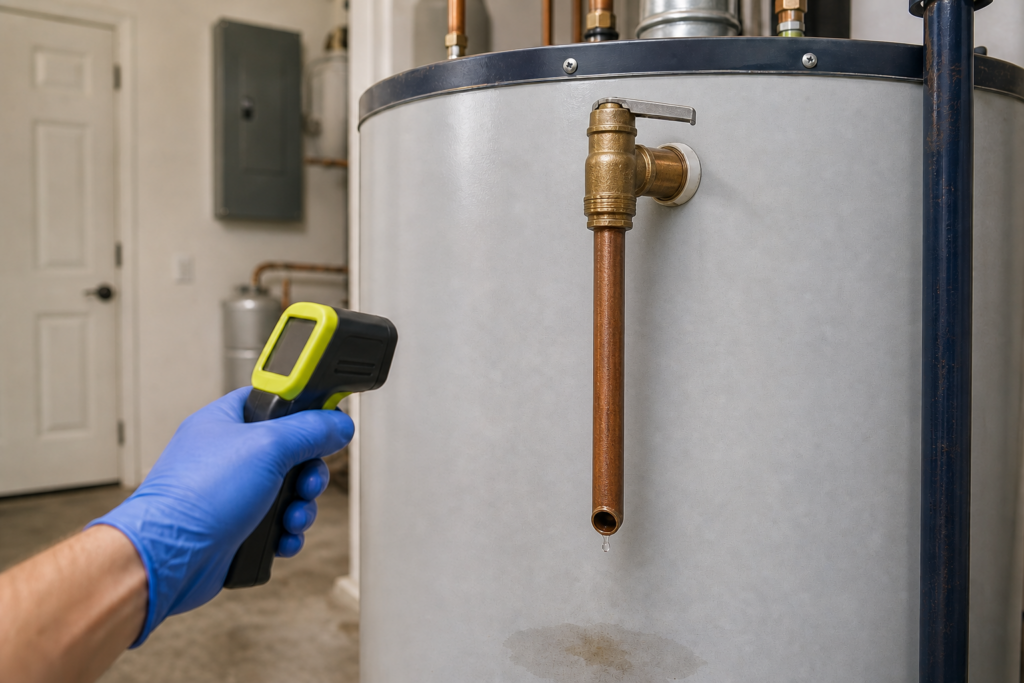
Water dripping from a water heater relief valve or its discharge pipe means the valve opened or is no longer sealing completely. The valve may be responding to excessive temperature or pressure, pressure created as heated water expands, debris on the valve seat, or wear inside the valve. Because it is a safety device, the outlet should never be capped, plugged, reduced, or blocked.
A few drops and a steady flow are not the same condition, but neither should be diagnosed from appearance alone. Note exactly where the water starts, when it appears, and whether the water is unusually hot. Keep people and pets away from the discharge path because the water can be hot enough to cause injury.
What the Temperature-and-Pressure Relief Valve Does
The temperature-and-pressure relief valve is often called the T&P or TPR valve. On a conventional tank water heater, it is typically threaded into the upper portion or side of the tank. A lever sits on the valve body, and a discharge pipe carries released water toward a safe termination point.
Its purpose is to open when temperature or pressure inside the tank exceeds the valve’s operating boundary. Releasing water reduces the dangerous condition instead of allowing pressure to continue building inside a closed tank.
That protective role makes the valve different from an ordinary drain or faucet. Water at the discharge outlet can be evidence that the valve did its job, but it can also mean the system has a pressure, temperature, expansion, or sealing problem that remains unresolved.
Do not lift the lever, remove the valve, or alter the discharge pipe to investigate a drip. A plumber can test the system while controlling hot water and pressure safely.
Thermal Expansion Can Raise Pressure During a Heating Cycle
Water expands as it heats. In some plumbing systems, that small increase can move back toward the public supply. In a closed system, a check valve, backflow device, pressure-reducing valve, or other control can prevent the expanded water from moving backward. The pressure then rises within the home’s piping as the water heater completes a heating cycle.
An expansion tank is commonly used to absorb that change, but it must be present, correctly sized, properly charged, connected in the right location, and still functional. A waterlogged, undersized, isolated, or failed expansion tank may no longer control the pressure rise.
One clue is timing. If the relief pipe drips after a long hot-water draw and then stops after the tank finishes reheating, thermal expansion may be involved. That pattern is useful evidence, not a final diagnosis. A plumber still needs to measure static pressure, pressure during the heating cycle, and the expansion tank’s condition.
High Household Water Pressure Can Keep the Valve Seeping
The water heater is connected to the same supply pressure that serves the rest of the home. If incoming pressure is excessive or a pressure-reducing valve is failing, the T&P valve may open or seep even when the water temperature appears normal.
High pressure can also show up as banging pipes, forceful faucet flow, short fixture life, or recurring leaks at supply connections. Those symptoms can have other causes, so pressure should be measured rather than guessed.
A valve replacement alone will not correct excessive supply pressure. A new valve may begin releasing water for the same reason as the old one. Diagnosis should include the pressure at rest and what happens when the water heater runs through a full heating cycle.
Excessive Water Temperature Needs Prompt Attention
A relief discharge paired with extremely hot water, steam, severe banging, or an overheating tank needs prompt attention. A thermostat, control, heating element, burner control, wiring fault, or another operating problem may allow the tank temperature to rise beyond its normal range.
Stay clear of the discharge outlet. Do not touch the water to judge its temperature, and do not operate the valve lever. If steam or scalding water is escaping, the tank looks deformed, or the unit is making violent sounds, keep everyone away. Shut off the unit’s energy source and the cold-water supply only if you can identify the correct controls and reach them without approaching hot discharge, steam, electrical damage, flame, or leaking fuel. Then request urgent professional service.
If you smell gas, leave the area and follow the gas utility’s emergency instructions from a safe location. Do not operate switches or attempt a water-heater repair.
A Worn or Fouled Valve May Not Reseal
The valve contains a spring and sealing surfaces that must close after pressure and temperature return to an acceptable range. Mineral deposits, corrosion, debris, age, or damage can keep those surfaces from sealing completely.
A valve can therefore drip even after the condition that opened it has passed. It may also seep without an obvious pressure or temperature event. That does not make the discharge pipe optional, and it does not prove the valve is the only failed part.
Forney-area water can leave mineral deposits on hot-water components. Existing sediment or scale symptoms may provide context, especially when the tank also makes popping sounds or delivers discolored hot water. The exact relief-valve problem still needs its own inspection rather than being treated as a sediment diagnosis by default.
Make Sure the Water Is Coming From the Relief System
Water can travel along a tank, pipe, or fitting before it reaches the floor. A damp spot beneath the relief discharge pipe does not always mean the T&P valve is the source.
Without touching hot components, look for the highest visible wet point. Common nearby sources include:
- The hot- or cold-water connection above the tank
- A shutoff valve or threaded fitting
- The drain valve near the bottom of the tank
- An expansion-tank connection
- A tank seam or the tank base
- Condensate from nearby equipment
- Water running down the outside of the discharge pipe from another source
Use a flashlight and observe from a safe distance. Do not remove insulation, tighten hot fittings, or place your hand beneath the discharge opening. A photo or short video showing the first wet point and the timing can help a plumber reproduce an intermittent condition.
Safe Details to Record Before the Service Visit
Useful observations can narrow the test plan without exposing you to hot water or pressure.
Record whether the water appears:
- Only while the tank is reheating
- Shortly after several showers or another long hot-water draw
- Continuously, even when no hot water has been used
- At the valve body, a threaded joint, or the pipe outlet
- As occasional drops, a small stream, or a steady flow
- Along with unusually hot water, banging, hissing, steam, or an odor
Also note whether an expansion tank is visible near the water heater and whether other fixtures have unusually forceful flow. Do not tap, drain, recharge, or adjust the expansion tank yourself. Its air charge and plumbing pressure must be checked under controlled conditions.
Keep the discharge area clear. Do not place a bucket, cap, clamp, plug, valve, or hose where it could restrict the outlet. A loose container positioned well away from the pipe may obscure the exact source or create a scalding hazard, so leave the area undisturbed unless a plumber directs otherwise.
Why Replacing Only the Relief Valve May Not Solve It
A replacement valve may stop a leak caused by damaged sealing surfaces, but it cannot correct overheating, high supply pressure, or uncontrolled thermal expansion. If the underlying cause remains, the replacement may discharge too.
The opposite mistake is assuming that pressure must be high because the pipe is wet. A corroded tank connection, leaking thread, failed valve body, or water tracking from another fitting can imitate a relief discharge.
The safest repair sequence is diagnosis first. A plumber can confirm the source, measure the system, inspect the safety controls, and then explain whether the correction belongs at the valve, expansion control, pressure regulator, thermostat or operating control, connection, or water heater itself.
What a Plumber Checks During a Relief-Valve Diagnosis
A water-heater inspection may include:
- Confirming the exact point where water begins
- Measuring cold static supply pressure
- Watching pressure while the tank heats
- Checking delivered hot-water temperature with appropriate instruments
- Inspecting the expansion tank and its connection
- Reviewing the pressure-reducing valve or backflow arrangement when present
- Checking the relief valve, discharge pipe, tank connection, and nearby fittings
- Looking for tank corrosion, seam leakage, deformation, or other replacement indicators
- Verifying that the discharge path remains open and safely arranged
The measurements should be considered together. A normal reading at one moment does not rule out a pressure rise that occurs only during heating, and a dry valve during the visit does not erase a repeatable drip shown in a homeowner’s photo or timing notes.
Frequently Asked Questions
Is an occasional drip from the relief pipe normal?
An occasional drip can occur when the valve responds to a temporary pressure or temperature increase, but the cause still deserves evaluation. Timing during reheating can point toward thermal expansion, while unrelated or continuous seepage may indicate a pressure, temperature, valve, or connection problem.
Can I cap the pipe until a plumber arrives?
No. Never cap, plug, clamp, reduce, or close the relief valve or its discharge pipe. Blocking the safety outlet can allow dangerous pressure to remain in the tank.
Should I lift the test lever to flush debris out?
Do not operate the lever as a troubleshooting step unless a qualified professional who has assessed the installation directs the test. Hot water can discharge suddenly, and an older valve may not reseal after it is opened.
Does a dripping relief valve mean I need a new water heater?
Not automatically. The cause may be a valve, supply-pressure, thermal-expansion, temperature-control, connection, or tank problem. Replacement decisions should follow measurements and an inspection of the tank’s condition.
Why does it drip only after several showers?
The tank may be reheating a larger volume of water, which increases thermal expansion. That timing is useful evidence, but a plumber should measure pressure through the heating cycle and check the expansion control before identifying the cause.
Protect the Tank Without Blocking Its Safety Outlet
Relief-valve water is a warning to measure temperature, pressure, expansion, and the condition of the valve and tank. Keep the discharge path open, stay clear of hot water, and avoid a guessed part replacement that leaves the cause in place.
Full Force Plumbing can inspect the water heater, reproduce the timing when possible, and explain the repair options for your Forney home. Schedule water-heater service when the relief pipe begins dripping, and seek prompt help if the flow is steady, scalding, steaming, or accompanied by severe noise or tank damage.